Key secrets and tactical tricks for successful play in Champions League Fantasy
How to earn more points in the Champions League Fantasy?

Champions League Fantasy (UEFA Champions League Fantasy Football) largely resembles classic Fantasy EPL, but this game has several fundamental features. And if in Fantasy Premier League the manager mainly forms the squad before the start of the game week and relies on successful performances of his players, then in UCL Fantasy the work with the team continues even after the first matches.
The main advantage of the UEFA game is the ability to change the captain and make manual substitutions between match days. This means that even a poor start to the game week does not necessarily ruin the entire result. Properly selected bench players, smart distribution of players across days, and timely decisions can bring additional points.
Let’s go over the main rules and tactical tricks that will help you manage the team more effectively in Fantasy Champions League.
1. Change the captain depending on the results
The ability to change the captain during the matchday is one of the most important features of UCL Fantasy. Unlike classic FPL, here it is not necessary to make a final choice before the first match and keep it until the end of the game week.
If the chosen captain played on Tuesday but scored few points, you can pass the armband to another player who will be on the field on Wednesday or the next game day of the same matchday.
For example, if your first captain earned only 3 points, and there is a striker in the starting lineup who is set to play the next day, you can take a risk and switch the armband to him. In this case the points of the new captain will be doubled, and the original captaincy bonus will be lost.
However, there is an important nuance: after confirming the captain change you cannot revert to the original option. You also cannot appoint as captain a player who has already played a match in the current game week.
How to correctly use the captain change:
Try to choose as the first captain a player who plays on the earliest day of the matchday.
Determine backup options for the upcoming game days in advance.
Don’t rush to change the captain after every small result. Assess how realistic it is that the next candidate will score more points.
Take into account the opponent, the likely number of goal chances, the player’s form and his role in the team.
The main idea is simple: first use the opportunity to get points from a captain of an early game day, and then decide whether to keep his result or hand the armband to the next player.
2. Do not underestimate the bench
In UCL Fantasy bench players are much more important than in classic Fantasy EPL. During most matchdays you can manually replace starters who have already played with bench players whose teams have not yet taken the field.
Therefore, when forming a team it is important to evaluate not only the starting eleven but also all 15 spots in the squad.
At the same time it is not necessary to buy only expensive players with a guaranteed spot in the starting lineup. It is much more important that bench players regularly get playing time and have the opportunity to bring points on the days when you can field them.
How manual substitutions work
After the completion of all matches of one game day and before the start of the next fixtures within the same matchday you can:
Replace up to four starters.
Field any bench players in their place whose teams have not yet played in the current game week.
Change the captain to a player who has yet to play.
The player you remove from the starting lineup will no longer earn points for this matchday. Therefore, you shouldn’t rush with substitutions after the early matchdays: sometimes even a modest result can turn out better than the one a substitute would bring.
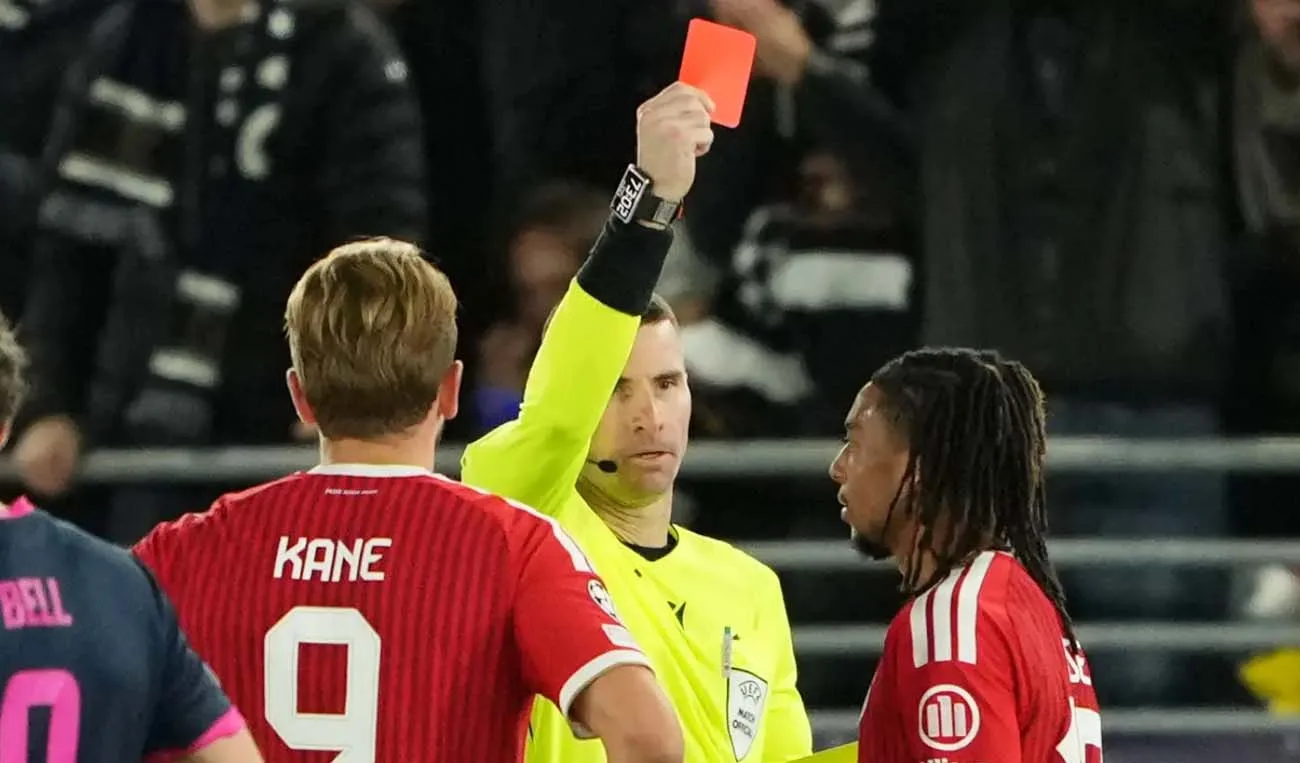
There are other restrictions as well. You cannot field a player who has already played in the current round, and confirmed manual substitutions cannot be undone. Players who have received a red card cannot be replaced manually either.
Why it’s important to distribute players across game days
Imagine that most of your team plays on Tuesday, and on Wednesday only two players take the field. In that case, you’ll have few maneuvering options: you can replace underperforming players only with a limited number of substitutes.
It’s much more convenient when players are distributed more evenly across game days. Then you’ll have several replacement options left and an additional candidate for the captain’s armband.
That’s why, when choosing substitutes, you should consider not only their cost and potential performance but also the match schedule.
3. Don’t forget about automatic substitutions
In UCL Fantasy there are not only manual but also automatic substitutions. If a player from the starting lineup did not appear on the field at all during the matchday, he can be replaced by a bench player.
To do this, you need to set the substitutes’ priority correctly. The system will consider their order and position constraints: after an automatic substitution, the lineup must still contain at least three defenders, two midfielders, one forward, and one goalkeeper.
But there’s an important rule that’s easy to forget: any manual change to the lineup disables automatic substitutions for the remainder of the matchday.
These actions include:
Manual substitution of one or more players.
Changing the captain.
Changing the order of substitutes after the matchday has started.
Moreover, automatic substitutions will not return even if you later try to restore the original lineup.
Therefore, before making a decision, you need to determine what is more advantageous: preserving the possibility of automatic substitutions or starting to manage the lineup yourself after the early matchdays.
4. Use the hidden source of points — Ball Recoveries
When selecting players for UCL Fantasy, you shouldn’t focus solely on goals, goal assists, and clean sheets. UEFA’s game includes an additional metric that can regularly earn points for defensive‑minded players.
We’re talking about Ball Recoveries — regaining possession for one’s own team. For every three such actions, a player earns one additional point.
This makes certain defensive midfielders and defenders particularly interesting, as they regularly engage in defensive work, intercept passes, and regain possession for their team.
When choosing such players, pay attention to:
Number of ball recoveries per match.
Probability of starting.
Average playing time.
Player’s role in the team’s defensive structure.
Difficulty of the upcoming opponent.
Defensive midfielders who rarely score but consistently earn additional points for defensive actions can be especially valuable.
However, you shouldn’t select a player solely because of a high number of Ball Recoveries. Playing time, reliability of a starting spot, and overall scoring potential are also important.
5. Pay attention to attacking defenders
Wing backs with an active role in attack can be a very valuable acquisition. In UCL Fantasy a defender can score points in several ways at once: for goals, goal assists, clean sheets and ball recoveries.
Therefore, when selecting defensive players, do not limit yourself to players from teams considered the main favorites of the round.
It is useful to study the statistics of defenders' involvement in attack, created chances, passes into the box and participation in set pieces.
Players who are especially interesting are those who:
Regularly join attacks.
Take corners and free kicks.
Have good numbers for ball recoveries.
Play in teams with a high likelihood of keeping the goal clean.
Are rarely rotated.
At the same time, it is important to consider the opponent. Even the most attacking full‑back may turn out not to be the best option if his team faces one of the tournament's strongest clubs.
6. Choose goalkeepers based on the schedule
In UCL Fantasy it is especially useful to have two goalkeepers whose teams play on different days of the same matchday.
This provides additional flexibility. If the first goalkeeper has conceded several balls or failed to earn the expected points, he can be replaced by the backup goalkeeper who has not yet played his match.
However, this strategy works only while staying within the overall manual substitution limit. Moreover, after manual changes, automatic substitutions for the rest of the round are disabled.
When choosing a pair of goalkeepers, consider:
Probability of a clean sheet.
Number of shots the team allows the opponent to take.
Goalkeeper's potential in terms of saves.
Team's matchday.
Reliability of a starting spot.
It is not always worth overpaying for two top‑club goalkeepers. Sometimes a more affordable goalkeeper from a team that is regularly under pressure can earn extra points thanks to saves.
7. Keep an eye on the limit of players from one club
UCL Fantasy imposes a limit on the number of players from a single team. The permissible number of players depends on the stage of the tournament.
Tournament stage | Maximum players from one club |
|---|---|
Overall stage | 3 |
Play‑off knockout matches | 4 |
Round of 16 | 4 |
Quarter‑finals | 5 |
Semi‑finals | 6 |
Final | 8 |
In the overall stage you cannot include more than three players from the same club in your squad. This must be taken into account when building your team, especially if you want to bet on one of the tournament's main favorites.
As the competition progresses, the limit increases. Therefore, in later stages you can gradually increase the representation of teams that continue to fight for the trophy.
8. Use the Wildcard and Limitless chips wisely
UCL Fantasy provides two special chips: Wildcard and Limitless. Each can be used once per season, so it is important not to waste them without a clear understanding of the goal.
Wildcard — complete team overhaul
Wildcard allows you to make an unlimited number of free transfers. Unlike Limitless, the changes are retained even after the current matchday ends.
This chip is useful when the roster requires a serious overhaul: some players have lost their place in the starting lineup, some teams have been eliminated from the tournament, or the balance of power has changed after the latest stage.

Wildcard can also be used before an important playoff stretch to build a team taking the new schedule into account.
However, it is not advisable to automatically postpone it until the fifth or sixth gameweek. It is better to base the decision on squad health, schedule, and the prospects of the selected players.
Limitless — a team without budget restrictions
Limitless allows you to completely revamp the squad for a single gameweek with no budget constraints. After the round is finished, the team automatically returns to the state it was in before the chip was activated.
This is a great opportunity to assemble the strongest possible squad for a specific period of play without worrying about player costs and subsequent budget balance.
Limitless is especially interesting in gameweeks when several favorites simultaneously have favorable schedules and there is an opportunity to build a squad from a large pool of top‑club players.
At the same time, it is important to remember that limits on the number of players from a single club and the rules for manual substitutions still apply.
When to use chips
There is no universal rule that Limitless must be activated in the third gameweek and Wildcard in the fifth or sixth.
When choosing the timing, consider:
The number of strong teams with favorable fixtures.
The condition of your current squad.
Injuries and suspensions.
The likelihood of player rotation.
Upcoming schedule changes and the transition to playoffs.
Another important nuance of the 2026/27 season: both chips cannot be used on Matchday 1, Matchday 9, and Matchday 11. On these game days all managers are given an unlimited number of free transfers.
9. Don't waste points on unnecessary transfers
In the group stage of the Champions League, managers receive two free transfers before each matchday. If that's not enough and you decide to make additional changes, four points are deducted from the total score for each transfer beyond the limit.
Therefore, you shouldn't change players just because they didn't deliver the expected points in the previous round. It's far more important to assess the prospects for upcoming matches.
During the group stage you can carry over only one unused free transfer to the next matchday. For example, if you didn't use both transfers in a round, before the next you will have not three, but at most three free transfers — two new ones and one carried over.
If you use a Wildcard or Limitless, unused free transfers are not carried over.
Before the playoffs and the round of 16, UEFA provides separate periods with an unlimited number of free transfers. This allows you to significantly reshape the team without needing to accumulate a large number of changes in advance.
10. Take into account the specifics of point scoring
In UCL Fantasy the point scoring system differs from the one familiar to many Premier League Fantasy managers. Here, not only goals, assists and clean sheets matter, but also additional game metrics.
Main rules for awarding points in the 2026/27 season:
Action | Points |
|---|---|
Appearance | +1 |
Playing at least 60 minutes | +1 |
Goal from outside the penalty area | +1 additional |
Goal assist | +3 |
Every 3 ball recoveries | +1 |
Player of the Match award | +3 |
Scored penalty | +2 |
Conceded penalty | -1 |
Missed penalty | -2 |
Yellow card | -1 |
Red card | -3 |
Own goal | -2 |
Additional bonuses are provided for goalkeepers:
Action | Points |
|---|---|
Goal | +6 |
Saved penalty | +5 |
Clean sheet | +4 |
Every 3 saves | +1 |
Every 2 goals conceded | -1 |
Defenders receive 6 points for a goal and 4 for a clean sheet. Midfielders receive 5 points for a scored goal, and forwards – 4. Midfielders also receive one point for a clean sheet.
These differences must be taken into account when comparing players of different positions. For example, a defender's goal yields more points than a forward's goal, and a goalkeeper can earn additional points thanks to saves.
11. Don't forget about the schedule and line‑ups
Even the most promising player will be of no use if he remains on his club's bench. Therefore, before each matchday it is important to check team news, line‑up predictions, and injury information.
In UCL Fantasy it is especially useful to wait for the official line‑ups of the first matches, if the deadline allows it. However, you shouldn't postpone saving your team until the last second: changes must be confirmed before the start of the first matchday fixture.
Also keep track of which days your players are playing. This affects not only the captain choice but also the ability to use manual transfers.
Remember that Matchday 8, when all group‑stage matches start simultaneously, and the final are exceptions: the usual manual transfers between game days are not available in them.
Frequently Asked Questions about the Champions League Fantasy
Can you change the captain after the start of a matchday?
Yes. If the original captain has already played, you can pass the armband to another player in your squad whose team has not yet taken the field in this matchday. After confirmation, the decision cannot be changed back.
How many manual substitutions can be made in a single matchday?
You can replace a maximum of four players from the starting lineup. Instead of them, only substitutes whose teams have not yet played in the current matchday may be released. Players with a red card cannot be manually replaced.
Are automatic substitutions disabled after manual changes?
Yes. Any manual change, including changing the captain, substituting players, or altering the order of substitutes, disables automatic substitutions until the end of the current matchday.
How many free transfers are given in UCL Fantasy?
At the general stage, two free transfers are provided before each matchday. One unused transfer can be carried over to the next round. For each additional move beyond the limit, four points are deducted.
How do Wildcard and Limitless differ?
Wildcard allows unlimited transfers for free, and the new lineup is retained after the matchday ends. Limitless also provides unlimited transfers, but it lifts budget constraints only for one round. After it, the team returns to its previous state.
How many players from a single club can be selected?
At the general stage, you may take a maximum of three players from the same club. In the playoffs, the limit gradually increases: up to four in the tie‑break matches and round of 16, five in the quarter‑finals, six in the semi‑finals, and eight in the final.
Conclusion
Successful play in UCL Fantasy requires not only the ability to choose strong players, but also competent team management throughout the entire matchday. Changing the captain, manual substitutions, proper allocation of players across game days, and using hidden point sources can significantly affect the final result.
Also remember strategic planning: keep track of the schedule, check line‑ups, use free transfers sparingly, and choose the right moment to activate Wildcard and Limitless.
The main difference between the Champions League Fantasy and classic FPL is that the manager’s work does not end after the first whistle of the matchday. That is why attentiveness and timely decisions here can be just as important as the initial player selection.