Blank Gameweek in Fantasy Premier League: what it is and how to prepare
What is a Blank Gameweek in FPL and how to prepare your team for a blank round?

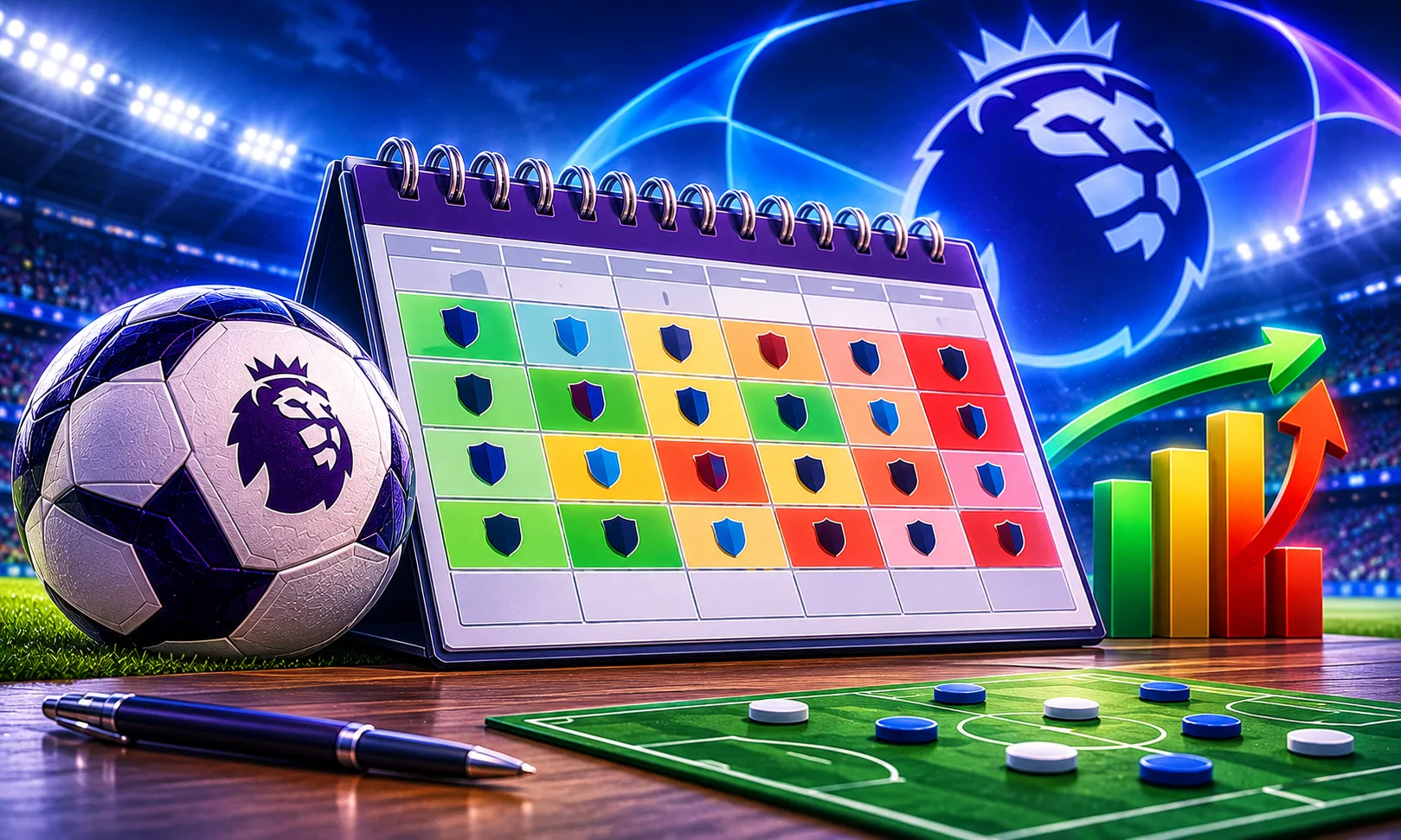
Blank Gameweek (BGW), or a blank game week, is one of the features of Fantasy Premier League that can seriously affect a manager's result. In such a game week one or several Premier League teams do not play matches, and their players cannot bring points to their owners.
If you don't prepare in advance for such a development, you may find that several first‑team players miss the game week. As a result, you have to either accept an incomplete squad, spend free transfers, or activate a special chip.
However, a Blank Gameweek does not necessarily become a problem. With smart planning you can get through it without serious losses, and sometimes even gain an advantage over other managers.
Let's find out why blank weeks occur, how to identify in advance the teams that may miss matches, and which strategies can help prepare your squad.
What is a Blank Gameweek in FPL
A Blank Gameweek is a game week in which not all 20 English Premier League clubs play matches.
If a team skips a particular game week, all its players receive zero points for that week. This applies to both starting XI players and substitutes.
For example, if you have three players from a club that does not play in a particular week, all three will automatically miss that game week. Even if they are team leaders and usually bring a large amount of points, in a BGW they will be of no use.
It is important to understand that a Blank Gameweek does not mean the cancellation of the entire week. Usually most teams continue to play as scheduled, and only certain clubs are left without a match. However, the scale of a blank week can vary.
Why Blank Gameweeks Appear
The main reason for BGWs is the clash of the Premier League calendar with other football competitions.
National cup tournaments especially often affect the Premier League schedule:
FA Cup — English Cup.
EFL Cup — English League Cup.
When cup matches coincide with the scheduled weekend for league games, some Premier League fixtures have to be postponed. As a result, the teams that were supposed to play in that week are left without a match.
Later postponed fixtures can be rescheduled to other dates. If several such matches fall into the same game week, a Double Gameweek (DGW) arises, where individual clubs play two matches instead of one.
Thus, Blank and Double Gameweeks are often linked: postponements create blank weeks, and the subsequent compression of the calendar can lead to double weeks.
When Blank Weeks Usually Occur
The most noticeable Blank Gameweeks often appear in the second half of the season — especially during the later rounds of the FA Cup and other competitions.
However, you should not rely on specific game weeks in advance. Exact dates depend on the season calendar, cup match results, and organizers' decisions on postponements.
Therefore, you need to monitor not only the Premier League calendar but also the national cup schedule. The further teams progress in the competitions, the higher the likelihood of changes to the original schedule.
How to Prepare in Advance for a Blank Gameweek
The main rule of successful preparation is not to wait for the official announcement of all postponements. The earlier you start analyzing the calendar, the more room you will have for maneuvering.
Watch the Cup Competitions
Pay attention to the Premier League teams' results in the FA Cup and EFL Cup, as well as the dates of the upcoming rounds.
If a league match clashes with the cup schedule, there is a chance of postponement. This does not mean that the match will necessarily be cancelled in the game week you expect, so it is important to wait for official confirmation.
It is also useful to study forecasts and calendar planners from the FPL community. They help assess possible scenarios in advance, but do not replace official information about postponements.
Don’t buy players while ignoring the upcoming calendar
Before a transfer, assess not only the immediate opponent but also the next few game weeks.
Imagine you have two candidates for purchase:
The first player is in good form, but his team is very likely to miss the upcoming BGW.
The second scores slightly fewer points, but his club continues to play according to schedule.
If a blank gameweek is already near, the second option may be a more practical acquisition.
Pay particular attention to situations where your team already has two or three players from the same club that may miss a gameweek.
Keep free transfers
In FPL you can carry over unused free transfers to the next game weeks. In the 2026/27 season, managers can accumulate up to five such transfers.
This is an important tool for preparing for a BGW. If a difficult calendar stretch is ahead, it can sometimes be wiser to forego an unnecessary reshuffle and keep the transfer for the future.
Having several free transfers allows you to replace players who miss a gameweek without losing points for additional reshuffles.
Use a strong bench
If a Blank Gameweek affects only a few teams, it is not always worthwhile to activate a Free Hit or rebuild the entire squad.
In such a situation, the bench comes to the rescue.
Before the season starts and during transfer windows, try to have reserves who regularly get onto the field and can score points.
Players who are especially useful are those who:
Have stable playing time.
Regularly make the starting lineup.
Play for teams with a favorable calendar.
Are not dependent on constant rotation.
Cost relatively little and allow you to preserve budget for main players.
You shouldn’t completely ignore bench players when forming your squad. A cheap player who hardly plays can be a convenient way to save budget, but during a BGW such savings can turn into a problem.
How many players without a match is already a problem?
There is no universal threshold. It depends on the quality of the other players and how strong your bench is.
If two or three players are without a match, and the remaining players have good prospects, you can get by without special chips.
If four or five players miss a gameweek, the situation becomes more complicated. Yet even in that case you don’t necessarily have to automatically use a Free Hit.
Assess how many players will actually take the field, how good their upcoming matches are, and what benefit you will get from using a chip.
Dead-ending: a strategy for preparing for a blank gameweek
Dead-ending is a strategy where the manager gradually changes the squad over several game weeks, deliberately favoring players who have a match in the upcoming Blank Gameweek.
The aim of this approach is to maximize the number of active players in the blank gameweek, without using a Free Hit and without incurring penalties for extra transfers.
For example, if there are three game weeks left before a BGW, you can gradually replace several players from clubs that will miss the gameweek with players from teams that have confirmed matches.

At the same time, it is important to understand that Dead-ending does not necessarily mean a complete overhaul of the team. Sometimes two or three timely transfers are enough to prepare the squad.
How Dead-ending works
Identify which teams may miss the upcoming gameweek.
Count the number of players from those clubs in your team.
Find suitable alternatives among players with fixtures in the BGW.
Use free transfers gradually, without spending points unnecessarily.
After the blank gameweek is over, assess how much the squad has changed and whether a rebuild is required.
The main drawback of Dead-ending
This strategy has a significant downside: for a single blank gameweek you may acquire players who are not particularly interesting in the long term.
For example, a purchased player might have a good schedule for only one gameweek, and after that a series of tough fixtures begins. As a result, you will have to spend transfers again to bring the team back to a balanced state.
Therefore, Dead-ending works especially well in combination with smart calendar planning. You shouldn't buy a player solely for a single match if after the BGW he will become a useless asset.
Sometimes this strategy is combined with using a Wildcard after a blank gameweek. However, this is not a mandatory condition: the decision depends on the team's state, available transfers, and the prospects of the upcoming gameweeks.
Free Hit — the main weapon against a massive Blank Gameweek
Free Hit — one of the most useful chips for preparing for large blank gameweeks.
It allows you to make an unlimited number of free transfers for a single gameweek. After the BGW ends, the squad automatically reverts to the state it was in before the chip was activated.
This means the manager can temporarily assemble a team of players who are guaranteed to have a match in the relevant gameweek, and then revert to the original squad.
When to use Free Hit
Free Hit is especially appealing if:
A large number of teams are missing the gameweek.
Your team has few players with fixtures.
Preparing with regular transfers would incur several four-point penalties.
After the blank gameweek you want to keep the current squad.
Available players have good point-scoring prospects.
However, you shouldn't use Free Hit just because several clubs don't play in the BGW. If you already have 10–11 players with fixtures and good prospects, the benefit of activating the chip may be small.
What happens to the team after Free Hit
After the gameweek ends, all temporary changes are reverted and the original squad is restored.
At the same time, keep in mind that Free Hit works only for one gameweek. It does not allow you to permanently get rid of players who miss fixtures and does not replace long-term planning.
In the 2026/27 season, managers have two Free Hit chips available: the first in the first half of the season and the second starting from GW20. An unused first chip cannot be carried over to the second half of the campaign.
Also, Free Hit cannot be activated in two consecutive gameweeks. If you used the first chip in GW19, the second will become available no earlier than GW21.
Wildcard: how to rebuild the team before or after a BGW
Wildcard allows an unlimited number of free transfers, with all changes retained after the gameweek ends.
Unlike Free Hit, this chip is suitable for long-term squad rebuilding.
Wildcard can be used both before a blank gameweek and after it. It all depends on how much the current squad needs changes.
Wildcard before Blank Gameweek
This option may be justified if you have too many players from clubs that are skipping the gameweek, while at the same time a favorable series of matches is starting for other teams.
In this case, you can completely restructure the squad, get rid of irrelevant players, and prepare the team not only for the BGW but also for the subsequent gameweeks.
Wildcard after Blank Gameweek
Another option is to get through the blank gameweek in advance using the existing players, and then activate the Wildcard to restructure the team.
This approach is especially useful if, for the sake of the BGW, you had to buy temporary options or the squad became unbalanced.
However, you should not automatically plan to use the Wildcard immediately after every blank gameweek. If the team is already in good shape, the chip may be useful later.
It is important to remember that the Wildcard and Free Hit cannot be used simultaneously in the same gameweek. In the 2026/27 season, two sets of these chips are available, and only one chip can be activated per Gameweek.
Which strategy to follow: Free Hit, Wildcard, or regular transfers?
The choice of approach depends on the scale of the blank gameweek and the condition of your team.
Situation | Possible strategy |
|---|---|
1–2 players are not playing | Use normal transfers or the bench |
3–4 players are not playing | Assess substitutes and gradually replace the absent ones |
A significant part of the squad is not playing | Consider a Free Hit |
The team needs a long‑term overhaul | Consider a Wildcard |
There are a few gameweeks left before the BGW | Accumulate transfers and prepare in advance |
After the BGW the squad became unbalanced | Rebuild the team with normal transfers or a Wildcard |
This table is not a strict rule. For example, even with five players missing a match a Free Hit may be disadvantageous if the remaining players have good prospects. Conversely, with four absent players activating the chip may be justified if the alternative lineup looks significantly stronger.
Manager's checklist before a Blank Gameweek
Before the start of a blank round, it is useful to go through a few points. This will help avoid spontaneous decisions and understand whether it is really necessary to use a special chip.
Step | What to do |
|---|---|
1 | Determine which teams are officially skipping the round |
2 | Count the number of players in your squad without a match |
3 | Check which bench players can come onto the pitch |
4 | Assess the prospects of the remaining players and their opponents |
5 | Calculate the available free transfers |
6 | Compare the benefit of normal swaps versus a Free Hit |
7 | Check whether a Wildcard will be needed for subsequent team restructuring |
8 | Make the final decision after the official schedule confirmation |
It is especially important not to rush the activation of a Free Hit. The closer the deadline, the more information may appear about team line‑ups, injuries, and other circumstances affecting player selection.
Typical mistakes when preparing for a BGW
Even experienced managers can misjudge the scale of a blank gameweek. Here are some common mistakes.
Preparing too late. If you start thinking about a BGW only a few days before the deadline, you may not have enough free transfers for a comfortable team reshuffle.
Buying players solely for one gameweek. After the BGW such players may lose relevance, and selling them will require new transfers.
Premature activation of Free Hit. Not every blank gameweek is extensive enough to warrant using the chip.
Ignoring the bench. Good reserves can cover several problematic positions without additional transfers.
Automatic use of Wildcard after a BGW. Sometimes one or two transfers are enough to bring the squad back to a normal state.
Focusing on unconfirmed postponements. Calendar predictions are useful, but the final decision should be made after the official announcement of match dates.
Frequently asked questions about Blank Gameweek in FPL
What is a Blank Gameweek?
A Blank Gameweek is a gameweek in which one or more Premier League teams do not play matches. Their players receive zero points for that gameweek.
Why do blank gameweeks occur?
The main reason is the clash between the Premier League schedule and national cup competitions, primarily the FA Cup and EFL Cup. As a result, some league matches are moved to other dates.
When do Blank Gameweeks usually occur?
Major blank gameweeks often occur in the second half of the season, especially during the later rounds of national cups. However, exact dates depend on the specific season's calendar.
Is it mandatory to use a Free Hit in a Blank Gameweek?
No. If you have enough players with fixtures and a strong bench, you can get through a blank gameweek without using the chip. A Free Hit makes sense when a temporary team reshuffle can yield a significant advantage.
Which is better to use against a BGW — Free Hit or Wildcard?
Free Hit is suitable for temporarily changing the squad for one gameweek. Wildcard allows you to restructure the team for the long term. The choice depends on whether you want to keep the original squad after a blank week or make permanent changes.
What is Dead-ending in FPL?
It is a strategy of gradually replacing players before a Blank Gameweek with players who have a match in the corresponding round. It helps increase the number of active players without necessarily using a Free Hit, but it may lead to the need to rebuild the squad after the BGW.
Conclusion
Blank Gameweek is an important part of the Fantasy Premier League strategy that should be prepared for in advance. Being able to track the cup calendar, preserve free transfers, and correctly assess squad depth helps avoid unnecessary penalties and not waste chips without sufficient justification.
You shouldn't treat every blank week as an emergency. If only a few players are not playing, often regular transfers and a good bench are enough. Free Hit is better saved for a truly massive BGW, and Wildcard should be used when the team needs a full overhaul.
The main thing is to assess not only a single blank week but also the calendar for several weeks ahead. This approach allows you to maintain the team's balance and use FPL's special options to the greatest benefit.